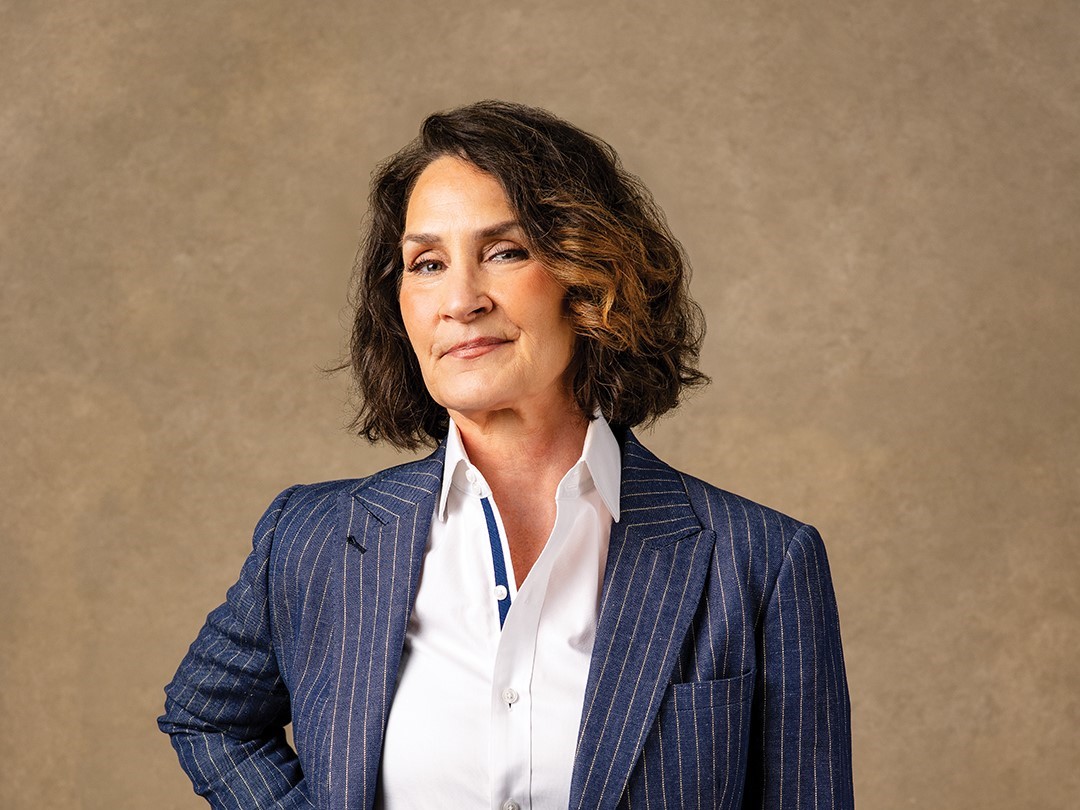
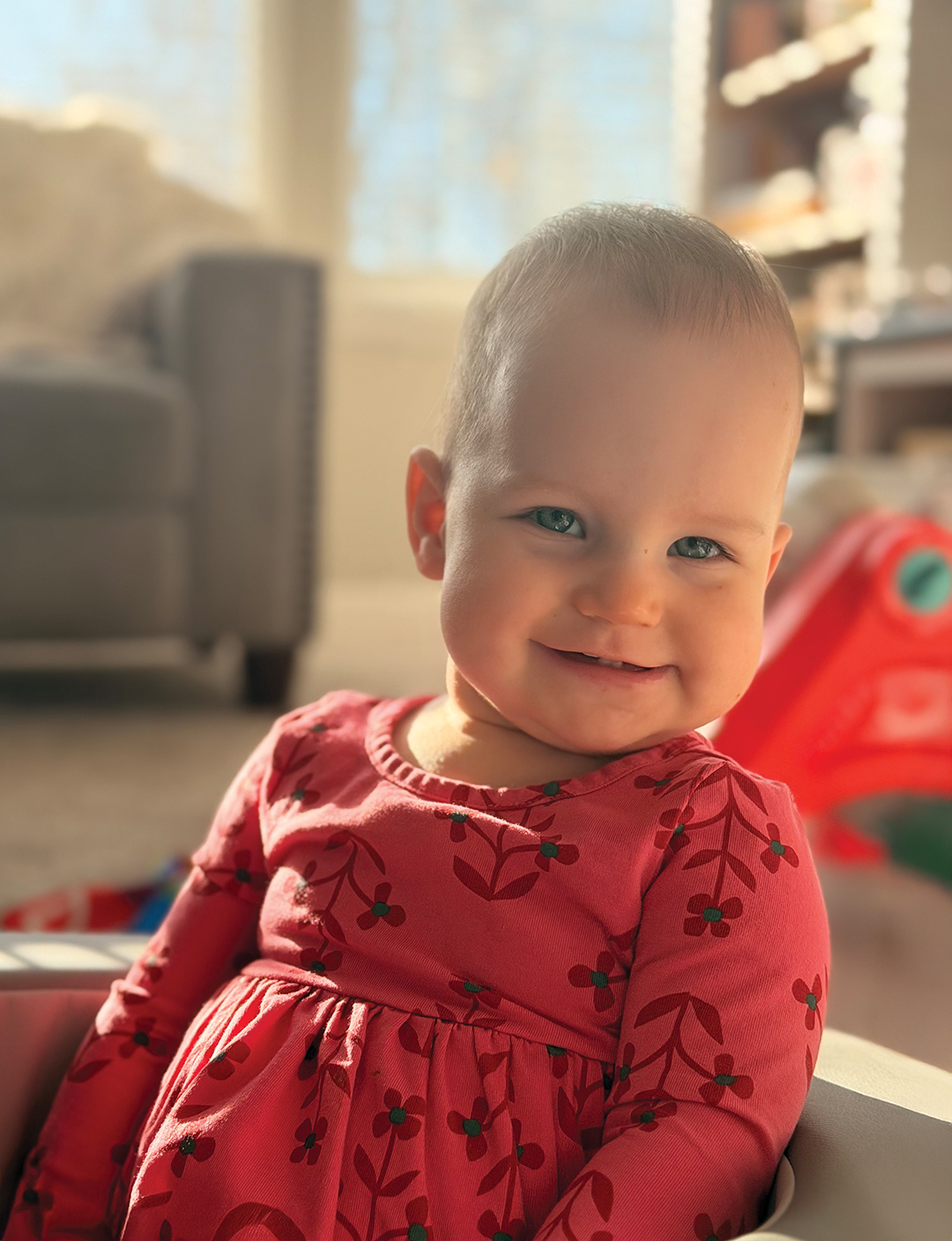
Alice Hinrichs had her first seizure at just 4 weeks old and was eventually diagnosed with CDKL5 deficiency disorder. Since her diagnosis, her parents have worked to raise awareness about this rare diagnosis as they care for Alice. Photos: Hinrichs Family
Jordyn Hinrichs first realized something was wrong when her daughter Alice Hinrichs was just under 4 weeks old. After a bath, Alice had her first seizure in her mother’s arms and suffered another hours later. A few months later, after two stays at M Health Fairview Masonic Children’s Hospital and genetic testing, they had an answer in March 2025: Alice was diagnosed with CDKL5 deficiency disorder [CDD].
June is CDD awareness month, designed to promote awareness, research and fundraising for this rare diagnosis, which is caused by mutations to the CDKL5 gene. People with CDD are impacted by cognitive, motor, speech and visual function delays, in addition to the epileptic seizures that are the most visible part of the disability. “It’s a really hard diagnosis,” Jordyn says. “It was a good month of just being sad because the grief with this kind of diagnosis isn’t just boom, it’s over. It’s this anticipatory grief for the future of all the things that she’s never going to get to do.”
The following months saw Alice start four different sessions of weekly therapy, including communication therapy. Twice a year, the family travels to Children’s Hospital Colorado to participate in an ongoing natural history study of CDD done by the International CDKL5 Clinical Research Network, which aims to create a baseline for the eventual gene therapy trials.
Alice, who is now about 18 months old, has tried seven different seizure medications and recently received a vagus nerve stimulator implant. Her longest seizure-free streak was 17 days. After switching to a different medication recently, her personality had more of a chance to shine. “It’s like a new baby,” Jordyn says. “She was sitting at the table eating dinner when we were halfway off medication, and she started being coy and silly, trying to get your attention, get you to smile at her. She just got way more interactive than she had ever been.”
Alice’s 4-year-old brother, Arthur Hinrichs, is great at bringing those smiles out too. He’s learned about Alice’s diagnosis with help from the children’s book What is Epilepsy? A Simple Explanation of a Complex Diagnosis written by Hailey Adkisson and illustrated by Kelsey Diaz.

Alice and her brother Arthur Hinrichs (age 4).
One misconception about CDD is that the seizures are the most significant part of the disorder, and while those are difficult to manage, the developmental delay and intellectual disability are also serious. Since Alice’s diagnosis over a year ago, Jordyn aims to raise awareness about accepting disabilities.
“A lot of people think that she’s sick and that she’s gonna get better,” Jordyn says. “My kid is disabled, and that’s OK. That’s just who she is, but she’s really healthy. And trying to help people understand that disability is not a bad thing, and we just need to be more accepting of it as a society.”
The Hinrichs actively share their story on their Facebook page, Alice Against All Odds. They also suggest two nonprofits accepting donations for research: The International Foundation for CDKL5 Research and CDKL5 Gene Therapy, which hopes to address the deficiencies causing developmental delays.
Facebook: Alice Against All Odds